
Isambard Kingdom Brunel
Isambard Kingdom Brunel (1806–1859) was a pioneering British engineer whose innovative designs and ambitious projects revolutionised transportation and civil engineering during the 19th century.
Renowned for his visionary creations, Brunel is best known for constructing iconic structures like the Clifton Suspension Bridge, groundbreaking steamships such as the SS Great Britain (one of the first iron-hulled, propeller-driven steamships), and the Great Western Railway (which set new standards for speed and efficiency in rail travel).
His ambitious projects often pushed the boundaries of what was thought possible, blending technical ingenuity with an artist's flair for design. Brunel's relentless drive to overcome challenges and improve connectivity made him a key figure of the Industrial Revolution, and his legacy continues to influence modern engineering and inspire new generations of innovators.
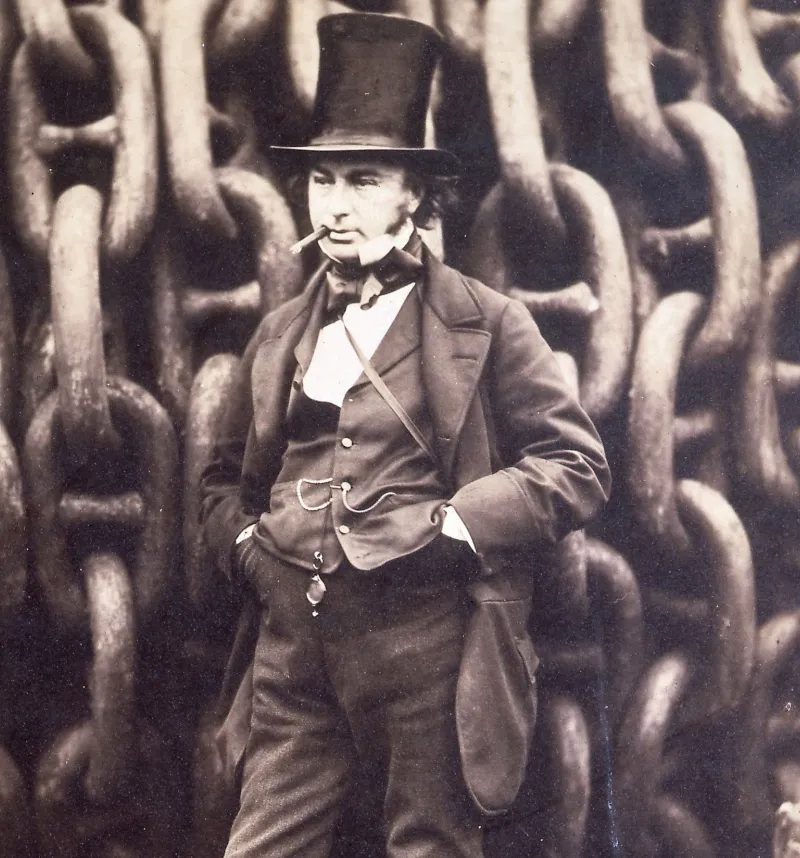
Early life & education
Isambard Kingdom Brunel was born on 9 April 1806 in Portsmouth, England, into a family deeply rooted in engineering. His father, Marc Isambard Brunel, was a renowned French engineer and inventor, best known for designing the Thames Tunnel, the first tunnel known to have been built successfully under a navigable river. His mother, Sophia Kingdom, was English, and her strength and resilience during Marc's financial difficulties greatly influenced Brunel's determination and work ethic.
From an early age, Brunel showed an aptitude for mathematics and mechanics, likely influenced by his father's engineering genius. Recognising his son's potential, Marc ensured that Isambard received a rigorous education. Brunel first studied at schools in England before being sent to the Lycée Henri-IV in Paris, one of France's most prestigious schools. There, he excelled in mathematics and engineering, gaining exposure to the advanced scientific principles of the time. His education continued under the guidance of Abraham-Louis Breguet, a renowned clockmaker and inventor. This apprenticeship in precision mechanics sharpened his problem-solving skills and attention to detail, qualities that would later define his career.
Returning to England in his late teens, Brunel joined his father in working on the Thames Tunnel project. This early exposure to large-scale engineering challenges not only refined his technical expertise but also fostered his ambition to push the boundaries of what was possible. These formative experiences laid the foundation for Brunel's extraordinary career.
Achievements
Thames Tunnel
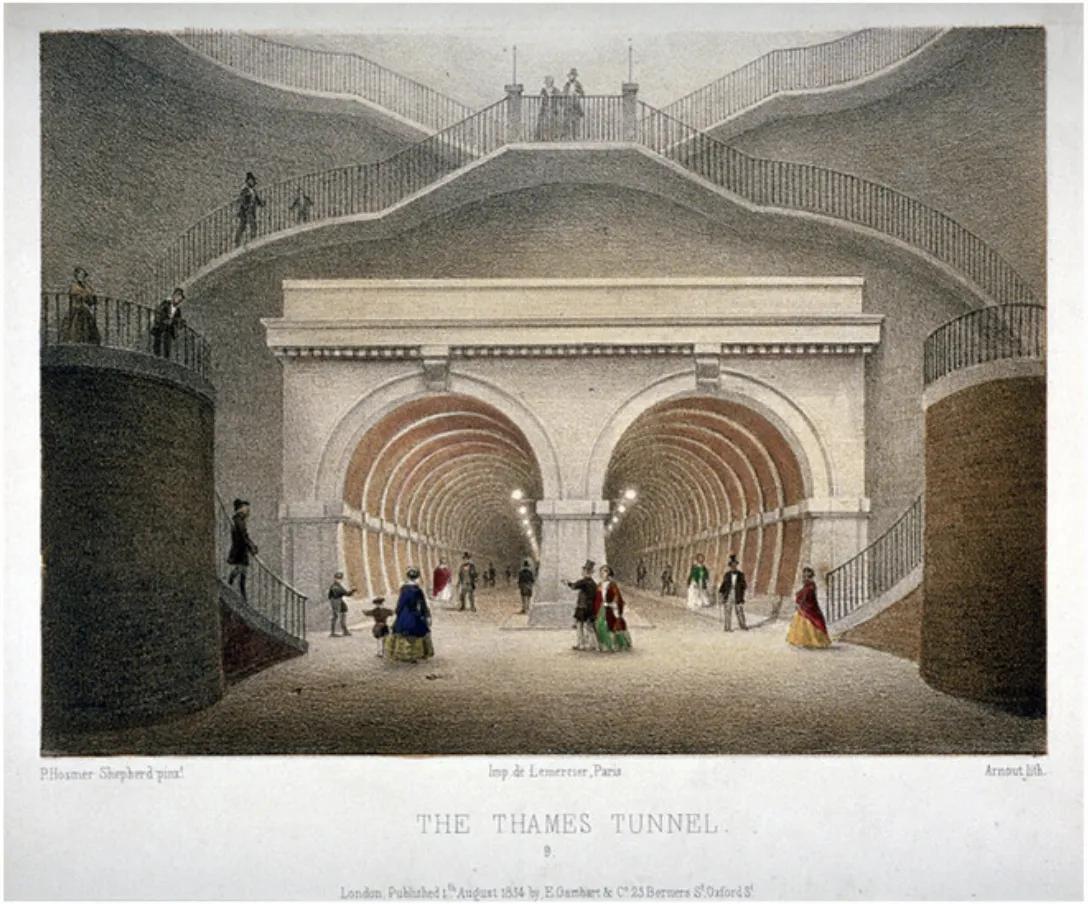
The Thames Tunnel, completed in 1843, was a groundbreaking engineering project and the world's first tunnel under a navigable river. It was designed to connect Rotherhithe and Wapping in London, providing a much-needed transport link beneath the River Thames. The project was the brainchild of Marc Isambard Brunel, who devised a revolutionary tunnelling shield inspired by the burrowing techniques of shipworms. Isambard Kingdom Brunel played a significant role in the tunnel's construction, marking one of his earliest major contributions to engineering.
Construction began in 1825 and faced numerous challenges, including financial difficulties, flooding, and the health risks of working in poorly ventilated conditions. Isambard, appointed resident engineer at just 20 years old, displayed remarkable ingenuity and resilience. He oversaw the workers and machinery, often spending long hours underground. His role included refining the use of his father's tunnelling shield, which provided a protective framework as workers excavated the soil. This innovation not only ensured the tunnel's structural integrity but also became a cornerstone of modern tunnelling techniques.
However, the project was fraught with danger. In 1828, a significant flood nearly claimed Isambard's life when the river broke into the tunnel. Despite being seriously injured, he was instrumental in coordinating repairs and ensuring construction resumed. The tunnel was eventually completed after 18 years of labour, opening to great acclaim as a pedestrian thoroughfare and later adapted for rail traffic.
The Thames Tunnel remains a testament to the Brunels' ingenuity and determination. Their pioneering use of the tunnelling shield revolutionised underground construction, influencing future projects worldwide. For Isambard, this early experience shaped his confidence and ambition, laying the groundwork for his illustrious career.
After its completion in 1843, the Thames Tunnel initially served as a pedestrian walkway, attracting millions despite its reputation as a venue for fairs and entertainment. By 1869 it had been converted for railway use as part of the East London Railway. Today, the tunnel remains in operation as part of the London Overground network, connecting Rotherhithe and Wapping. It also houses the Brunel Museum, celebrating its history and the Brunels' contributions to modern tunnelling.
Clifton Suspension Bridge
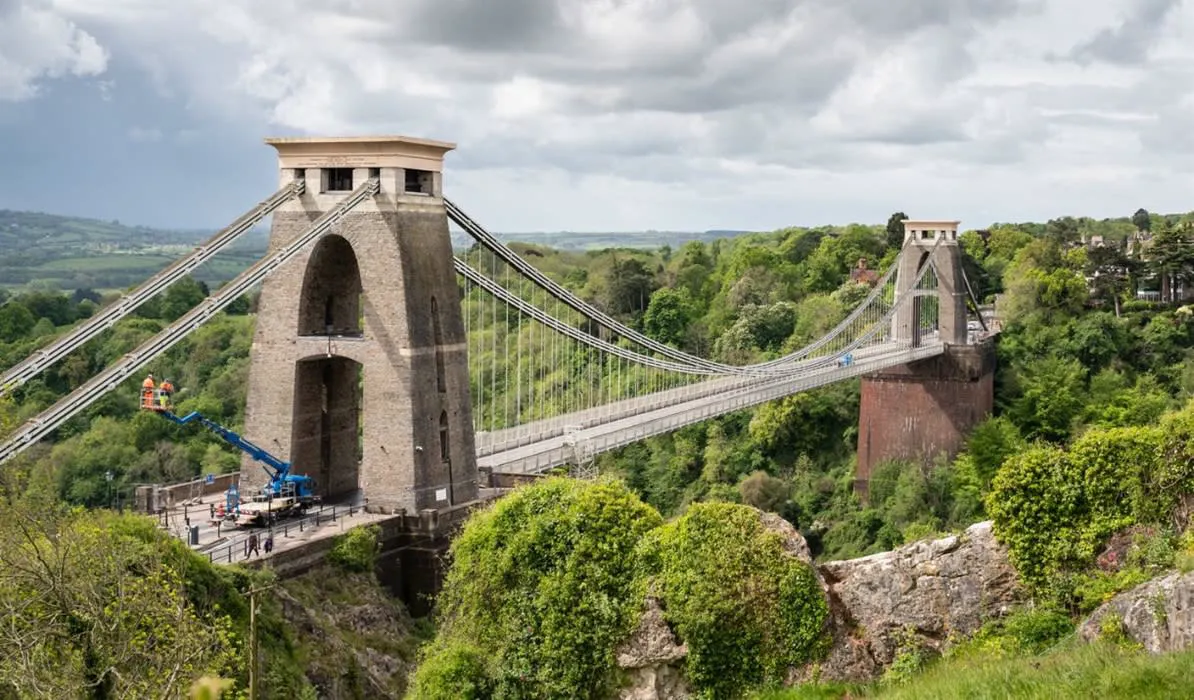
The Clifton Suspension Bridge, spanning the Avon Gorge in Bristol, is an iconic symbol of engineering excellence and a testament to Brunel's innovative genius. Although the bridge was completed in 1864, five years after Brunel's death, it stands as one of his most celebrated works. The project began in 1829–31 when competitions were held to design a bridge that could elegantly and effectively span the 702-foot-wide gorge. Brunel's early designs were not immediately accepted, but he later won the contract with a revised plan after impressing the judges with his bold vision and determination.
Brunel's design featured a suspension bridge supported by massive stone towers, combining strength with a graceful aesthetic. Construction began in 1836, but financial difficulties, political unrest and technical challenges delayed progress. Brunel worked tirelessly to overcome these obstacles, often consulting his father, Marc Brunel, for advice.
After Brunel's death in 1859, the project remained unfinished until a group of his colleagues and admirers, the Institution of Civil Engineers among them, revived it as a tribute to his legacy. They modified his original design slightly, incorporating newer engineering advances, and the bridge finally opened to the public in 1864.
Today, the Clifton Suspension Bridge remains a functional and iconic landmark, carrying vehicles and pedestrians while serving as a symbol of Bristol's industrial heritage. Its enduring appeal reflects Brunel's vision, determination and ability to merge functionality with beauty.
Chief Engineer of the Great Western Railway
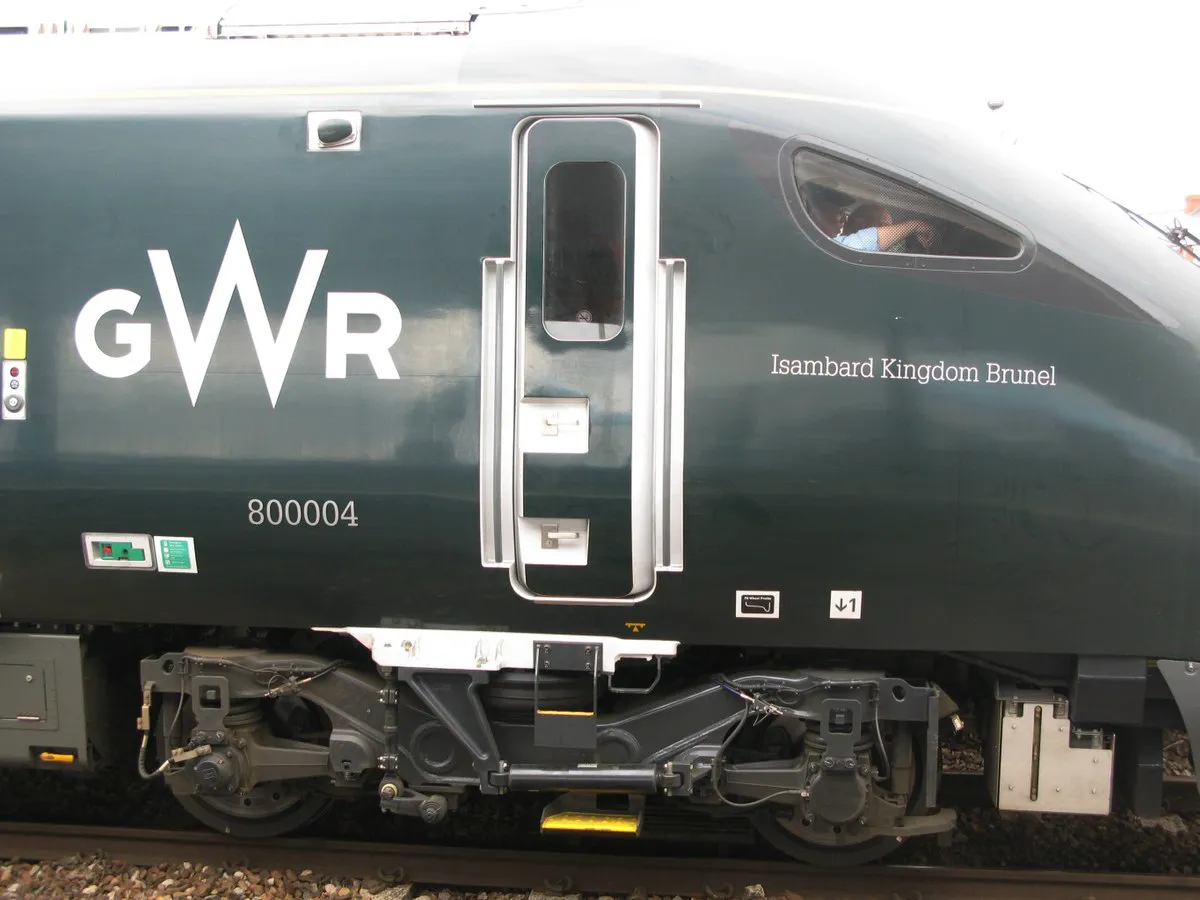
In 1833, at the age of just 27, Brunel was appointed Chief Engineer of the Great Western Railway (GWR), a position that would define his career and revolutionise railway engineering. The GWR, designed to connect London with Bristol, was envisioned as a great highway for modern transportation. His vision was to create a railway that prioritised speed, safety and passenger comfort, setting new standards for infrastructure and engineering.
One of Brunel's most innovative decisions was to adopt a broad gauge of 7 feet ¼ inch, which he believed would offer greater stability and smoother rides than the narrower gauges used elsewhere. Although controversial and ultimately replaced by standard gauge, this decision highlighted Brunel's commitment to innovation and engineering precision.
Brunel's tenure as Chief Engineer saw the completion of numerous iconic structures along the GWR route. Among his most celebrated works were the Maidenhead Railway Bridge, with its record-breaking flat arches, and the Box Tunnel, one of the longest railway tunnels of its time.
Brunel's work on the GWR not only connected major cities but also transformed transportation in Britain, making travel faster and more accessible. His vision extended beyond the railway itself; he saw it as part of an integrated system that included the transatlantic steamships SS Great Western and SS Great Britain, creating seamless connections between rail and sea.
Maidenhead Railway Bridge
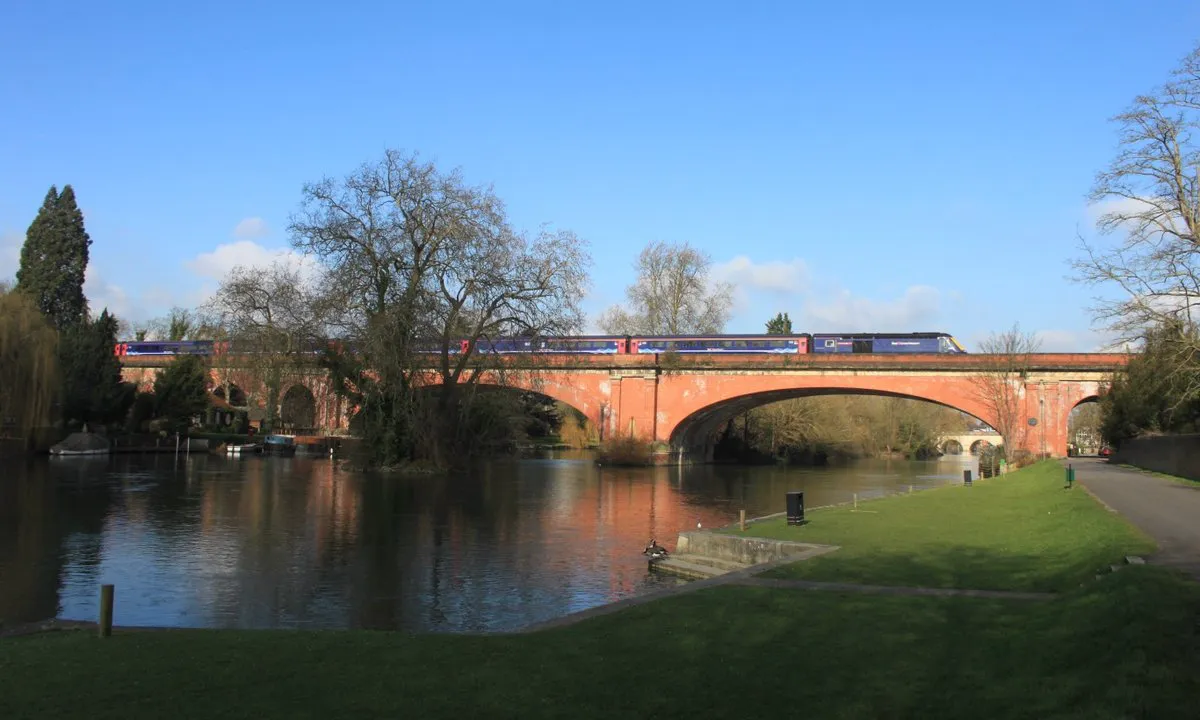
The Maidenhead Railway Bridge, completed in 1838, is one of Brunel's most remarkable engineering achievements and a vital part of the Great Western Railway. Spanning the River Thames near Maidenhead, the bridge was revolutionary for its two wide, flat brick arches that broke the engineering conventions of the time. The arches, each with a span of 128 feet, were the longest and flattest brick arches in the world when constructed. Many believed the shallow arches would collapse under their own weight.
Brunel's approach relied on carefully calculated engineering and high-quality materials to ensure the bridge's strength and stability. Bricks laid in a precise pattern allowed the arches to distribute weight efficiently, enabling the bridge to carry heavy GWR trains while keeping its elegant appearance.
The bridge has stood the test of time and continues to carry modern rail traffic nearly two centuries later. Today it is a Grade I listed structure. Often called the "Sounding Arch" because of its unique echo, it remains a lasting legacy of Brunel's ingenuity and vision.
SS Great Western
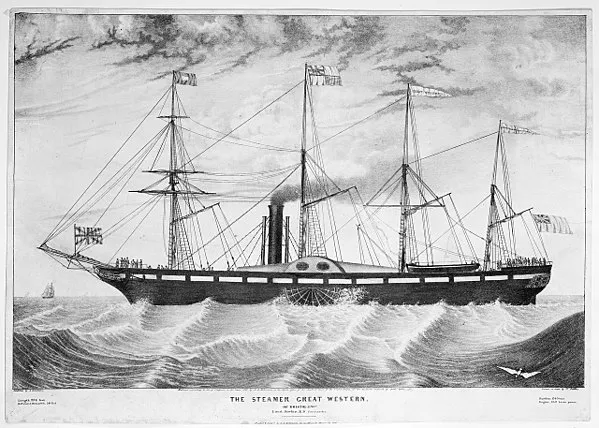
The SS Great Western, launched in 1837, was Brunel's first venture into shipbuilding and marked a pivotal moment in the history of transatlantic travel. Designed as a complement to the Great Western Railway, the ship was intended to extend the line's reach across the Atlantic, connecting Bristol to New York.
The SS Great Western was the largest passenger ship of its time, with a wooden hull and steam-driven paddle wheels. She was 236 feet long, and Brunel's emphasis on fuel efficiency and hull shape made her highly practical for long-distance voyages.
On her maiden voyage in April 1838, the Great Western crossed the Atlantic in just 15 days, demonstrating the viability of steam-powered ships for regular transoceanic travel and cementing Brunel's reputation as a visionary engineer.
She proved commercially successful, carrying passengers and cargo across the Atlantic for almost a decade, and inspired Brunel to design even more advanced ships. After 1847 she was sold to the Royal Mail Steam Packet Company and served routes to the West Indies, and during the Crimean War she was used as a troopship before being retired.
SS Great Britain
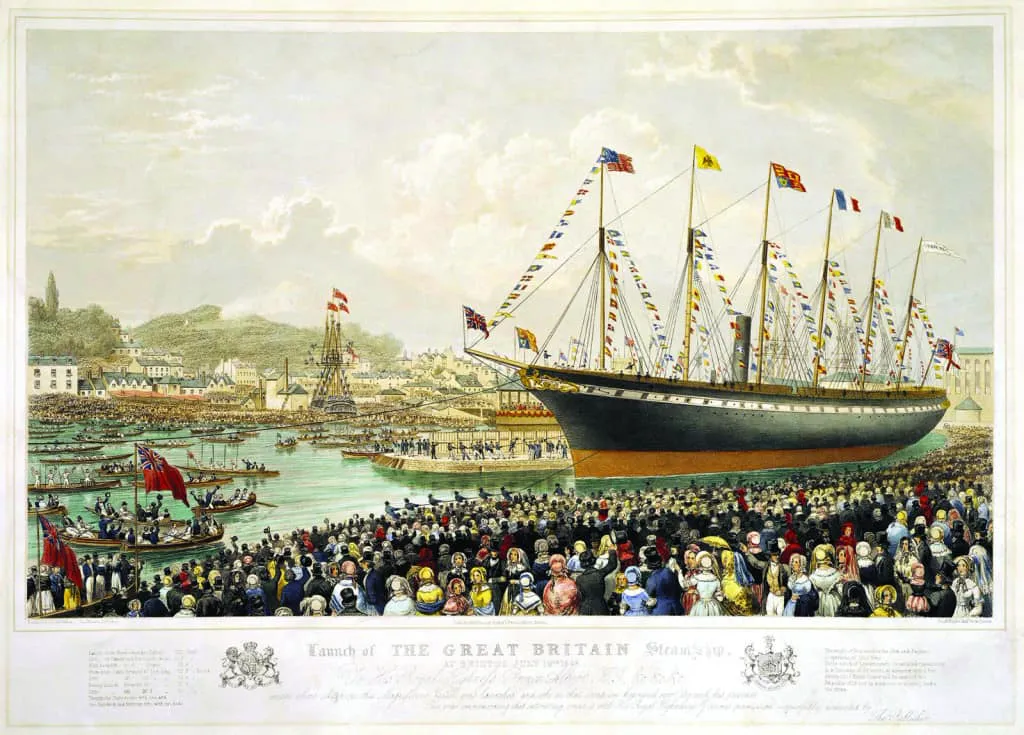
The SS Great Britain, launched in 1843, was a groundbreaking achievement in maritime engineering. As the first iron-hulled, screw-propelled steamship to cross the Atlantic, she revolutionised ship design and set new standards for ocean travel.
At 322 feet long, she was the largest ship in the world at the time. Her iron hull offered unprecedented strength and durability, and Brunel's use of a screw propeller in place of paddle wheels was more efficient and better suited to long voyages across rough seas.
In 1846 she ran aground in Dundrum Bay, Ireland, requiring extensive repairs and financial restructuring for her owners. However, Brunel's engineering proved sound, and the ship returned to service, becoming a successful passenger liner, carrying thousands of emigrants to Australia, and later a cargo ship.
Abandoned in the Falkland Islands, she was rescued in 1970 and returned to Bristol, where she has been restored as a museum ship in the dry dock in which she was built – and where The Brunel Way finishes.
Renkioi Hospital, Crimea
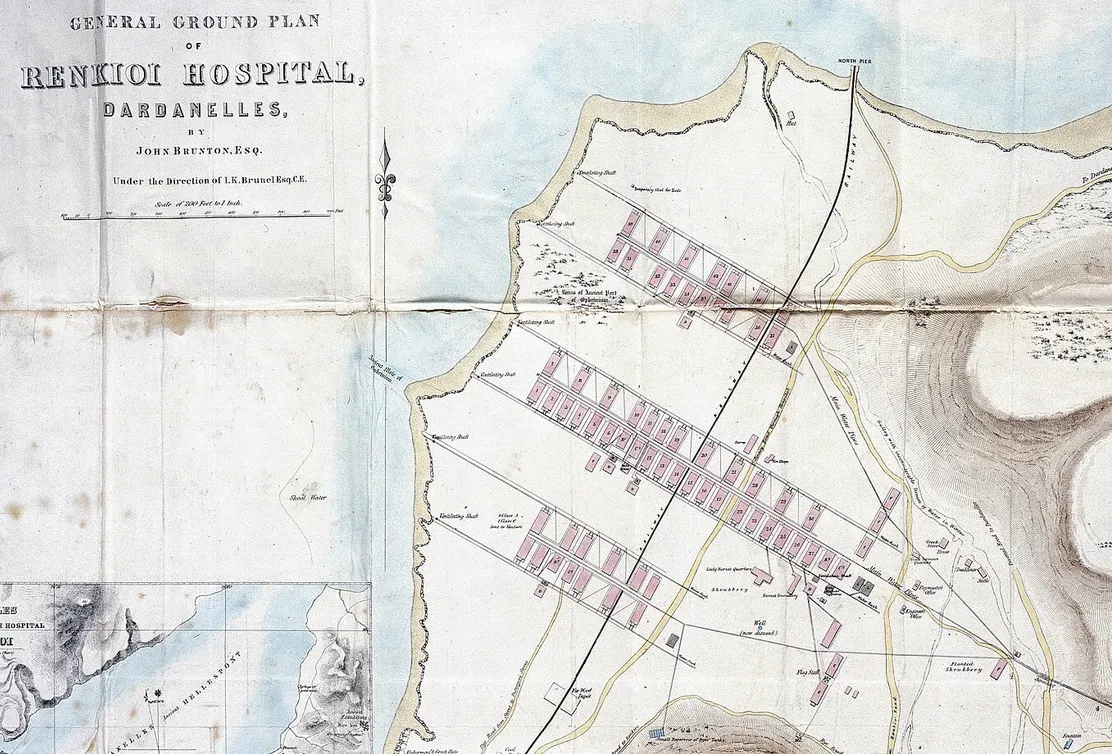
The Renkioi Hospital, designed by Brunel during the Crimean War in 1855, is a lesser-known but highly impactful achievement. At the request of the British government, Brunel was asked to address the appalling conditions and high mortality rates in military hospitals. He designed a revolutionary prefabricated hospital that set new standards for medical care and hygiene.
The hospital was made of modular timber units, prefabricated in England and shipped out for rapid assembly. Each unit was well-ventilated, well-lit and insulated, with effective drainage and clean water supplies to reduce the spread of infectious disease – one of the leading causes of death in existing field hospitals.
Construction was remarkably swift, taking just five months from design to completion, and the hospital could accommodate over 1,000 patients. Florence Nightingale's work on cleanliness, ventilation and organisation in nursing was closely aligned with the principles of Brunel's design, although the two did not directly collaborate.
The impact was profound. Mortality rates fell from over 42% in traditional hospitals to around 3% at Renkioi, saving countless lives and influencing the design of medical facilities worldwide.
SS Great Eastern
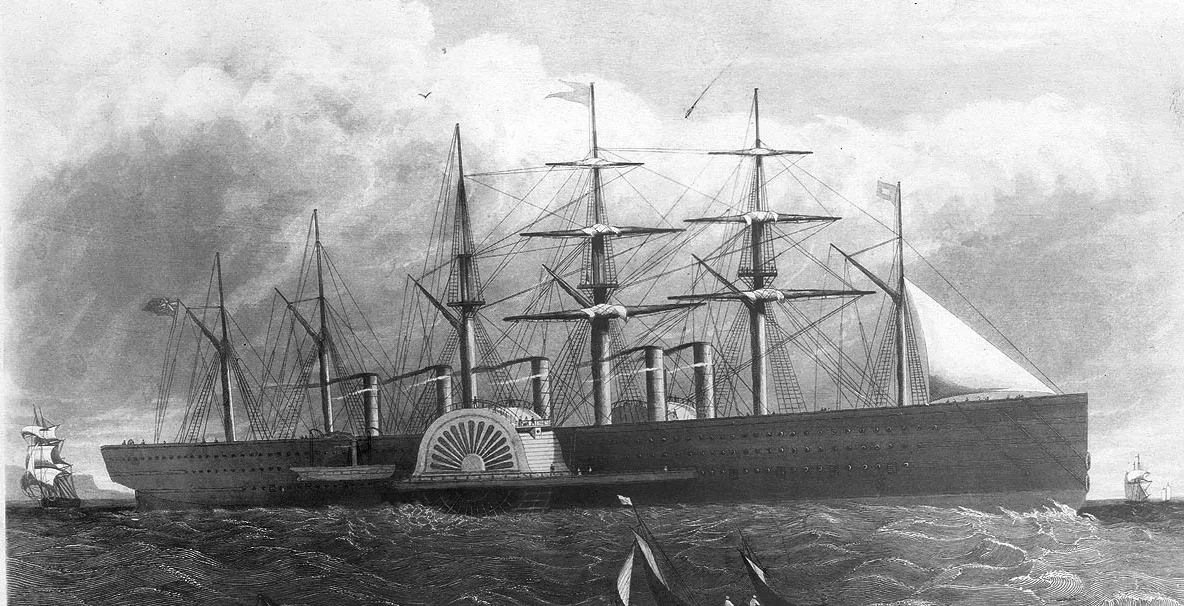
The SS Great Eastern, launched in 1858, was Brunel's most ambitious and controversial project. At 692 feet long and 18,915 tons, she was by far the largest ship ever built at the time – more than twice the size of any existing ship.
Her design was a bold departure from convention: a double iron hull for strength, both paddle wheels and a screw propeller for propulsion, and watertight bulkheads that made the ship far safer in the event of hull damage.
The project was plagued by financial difficulties, delays and technical problems, and Brunel suffered a stroke shortly before her maiden voyage. He died in 1859, and the Great Eastern never achieved the commercial success he had envisioned.
She made a number of transatlantic voyages and later found fame laying the first lasting transatlantic telegraph cable. In 1867 the French author Jules Verne travelled aboard her, inspiring his novel A Floating City. After serving as a floating exhibition hall and advertising hoarding in Liverpool, she was broken up in 1889–90.
Royal Albert Bridge, Saltash
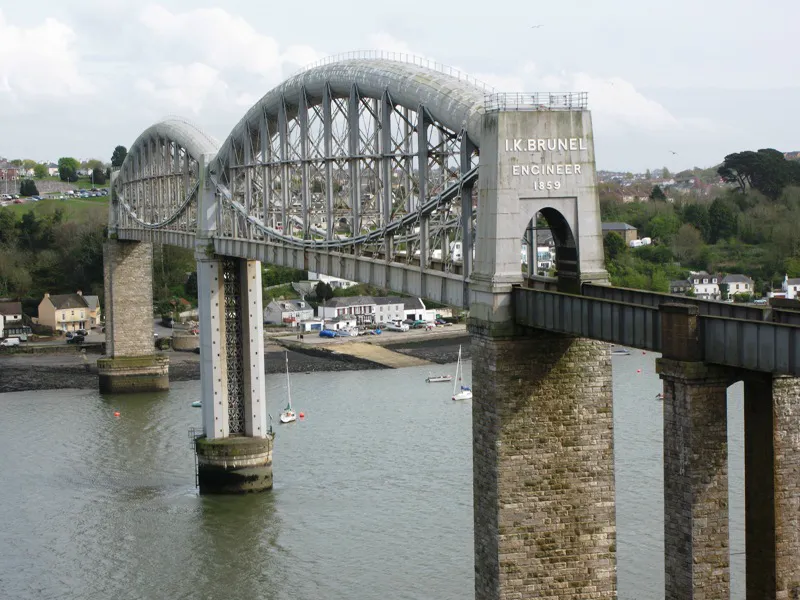
The Royal Albert Bridge, completed in 1859, is one of Brunel's most impressive engineering achievements and a key part of the Cornwall Railway. Spanning the River Tamar, it connects Saltash in Cornwall with Plymouth in Devon.
The bridge has two main spans of 455 feet, each formed by a huge wrought-iron tube in the shape of a lens, supported on masonry piers. The design coped with the river's tides and the challenging geography of the Tamar Valley while carrying the weight of heavy trains.
Officially opened by Prince Albert in 1859, a few months before Brunel's death, it remains in use today as a vital rail link between Cornwall and the rest of the UK. It is a Grade I listed structure and an iconic landmark of the Tamar Valley.
IKB quotations
I've always found the wisest and safest plans go straight in the direction that you believe to be right, and to plan without fear or compromise.— Isambard Kingdom Brunel
Be the first engineer and an example for future ones.— Isambard Kingdom Brunel
I am opposed to the laying down of rules or conditions to be observed in the construction of bridges lest the progress of improvement tomorrow might be embarrassed or shackled by recording or registering as law the prejudices or errors of today.— Isambard Kingdom Brunel